

What is it?
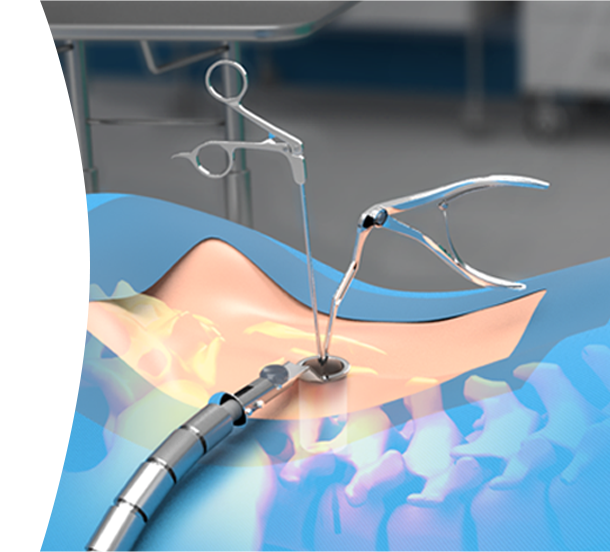
TLIF reaches a lumbar disc space from the back at an angle. The surgeon removes disc material, places graft and an interbody cage, and often adds screws and rods to stabilize the segment.
When might it be considered?
It may be considered for selected degenerative conditions or spondylolisthesis—slippage of one vertebra relative to another—when symptoms and instability support fusion.
How it works
Nerve decompression and fusion can be combined in the same procedure. The extent of decompression and the number of treated levels vary by patient.
Benefits, tradeoffs & risks
Potential complications include nerve injury, spinal fluid leak, infection, nonunion, cage or screw problems, and continued symptoms. Discuss alternatives as well as the intended benefit.
Recovery & follow-up
The early recovery plan emphasizes safe mobility and wound care. Longer-term follow-up assesses bone healing before restrictions are progressively changed.
Questions to bring
- What explains my symptoms, and how certain is the diagnosis?
- What nonsurgical options are appropriate for me?
- What is the main goal of this procedure in my case?
- How will treatment affect work, movement, and recovery at home?