

What is it?
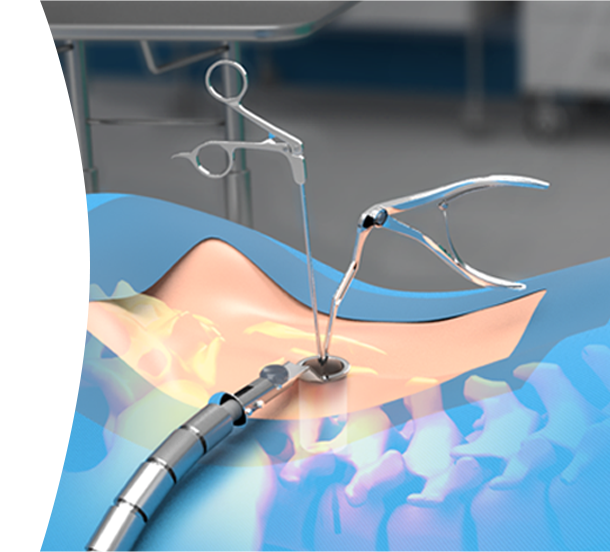
Lumbar fusion aims to stabilize selected vertebrae with bone graft and, when appropriate, cages, screws, or rods. Smaller access corridors may reduce disruption of surrounding tissues in suitable cases.
When might it be considered?
Fusion may be discussed for selected instability, vertebral slippage, deformity, or conditions requiring support with decompression. A scan alone does not establish the need for fusion.
How it works
The approach is chosen around the anatomy and surgical goals. Implants provide support while bone grows across the treated segment.
Benefits, tradeoffs & risks
Risks include nonunion, nerve injury, infection, blood clots, implant problems, and persistent pain. A minimally invasive approach still involves substantial surgery.
Recovery & follow-up
Fusion healing typically extends over months. Activity changes, bone health, and follow-up are important, and return to heavier work requires surgeon guidance.
Questions to bring
- What explains my symptoms, and how certain is the diagnosis?
- What nonsurgical options are appropriate for me?
- What is the main goal of this procedure in my case?
- How will treatment affect work, movement, and recovery at home?