

What is it?
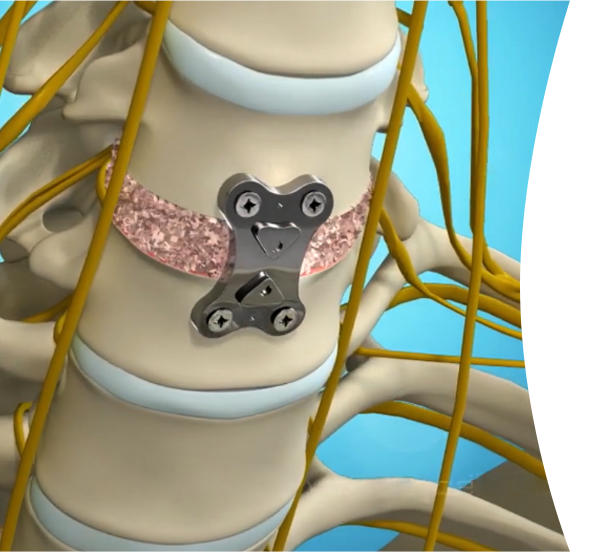
Cervical fusion joins selected neck vertebrae using bone graft, often supported by implants. As bone heals, the treated levels become one stable segment.
When might it be considered?
Fusion may be discussed for instability, deformity, or as part of decompression when the spine needs added support. The symptoms, alignment, and number of involved levels guide the decision.
How it works
The surgeon selects the approach and places graft and any needed fixation. Fusion is a biological healing process that continues well beyond the day of surgery.
Benefits, tradeoffs & risks
Fusion reduces movement at the treated levels. Risks include failure of the bones to unite, implant problems, nerve injury, and changes at nearby levels. Approach-specific risks also matter.
Recovery & follow-up
Follow-up checks healing and alignment. Nicotine exposure and bone health can affect fusion; discuss these with the team. Restrictions and rehabilitation depend on healing.
Questions to bring
- What explains my symptoms, and how certain is the diagnosis?
- What nonsurgical options are appropriate for me?
- What is the main goal of this procedure in my case?
- How will treatment affect work, movement, and recovery at home?